
The Mossy Nib
Spring has sprung
Spring starts today! Or does it?
Actually, there are several dates on which spring officially begins, depending on who you ask. A distinction is made between:
- astronomical (at the vernal equinox = the first of two equinoxes of the year, when the sun is exactly at the vernal point of the Earth’s orbit, i.e. the sun crosses the celestial equator from south to north. In the northern hemisphere, this always falls between 19. and 21. of March. This year, it is exactly today at 15:46 CET. I’ll probably forget terms like "celestial equator" again soon, but the fact that day and night are of equally long twice a year - once in spring and once in autumn - that I can remember...)
- meteorological (in the northern hemisphere, always on 1. of March. This date was set by the World Meteorological Organisation, WMO, a subsidiary of the UN. This date is important for statistics and climate comparisons)
- phenological (using indicator plants)
---> early spring: From the flowering of snowdrops and hazelnuts to the flowering of willows
---> mid spring: From the flowering of forsythia and the budding of gooseberries to the point when pear trees start to flower
---> late spring: From when apple trees and lilacs start to flower to the start of flowering of rowan and meadow foxtail
In Germany I found a distinction between early, mid and late spring. English sources seem to name mostly pre and full spring, thus grouping together mid and late spring into one category. (Correct me if I'm wrong here, please.)
Climate change has brought forward the start of the hazelnut blossoming season. Whereas it used to flower between February and April, it now often begins as early as December. Sources include the German Weather Service (Deutscher Wetterdienst) and media reports in the "Süddeutsche" and "Die Zeit"
How did I come to think of that?
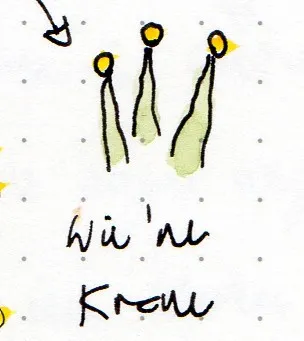
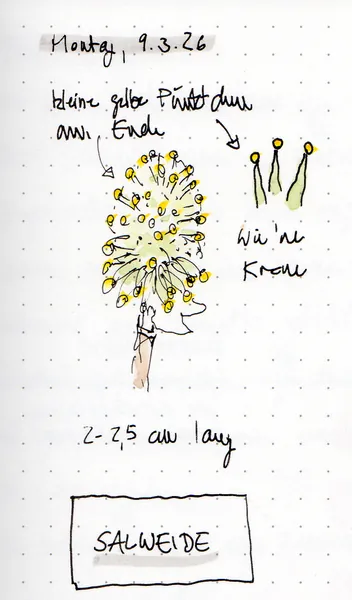
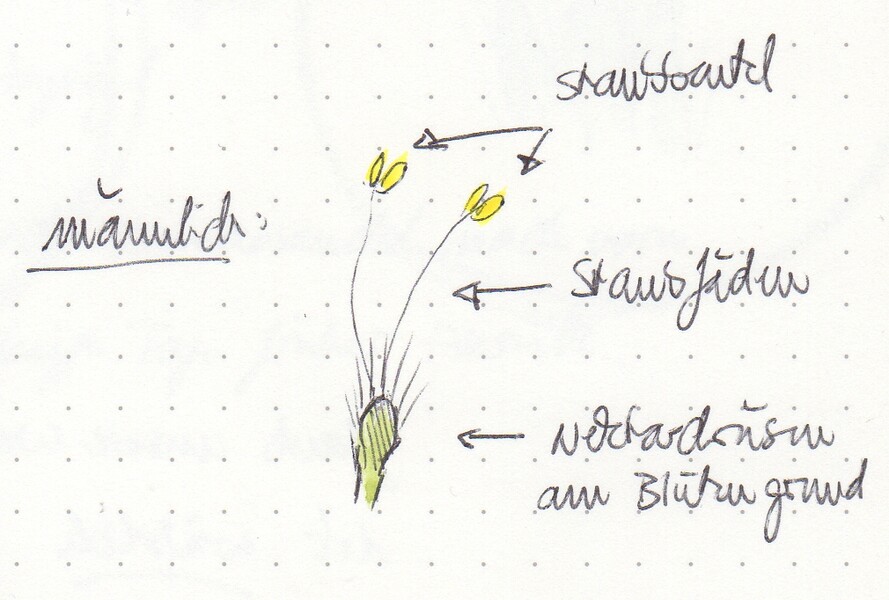
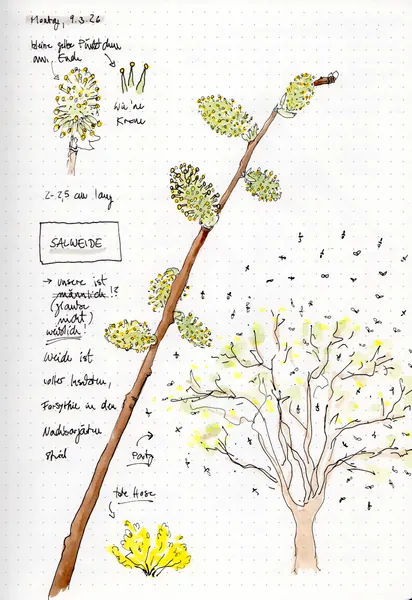
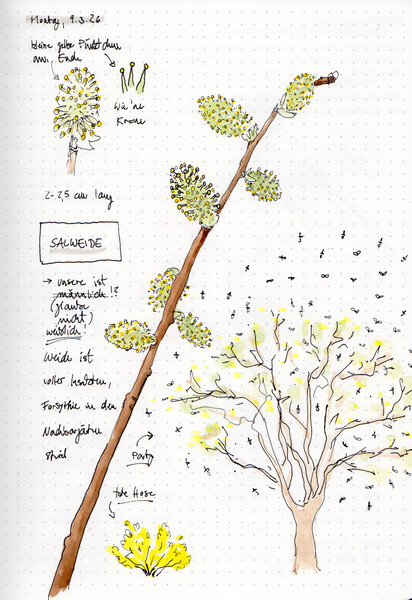
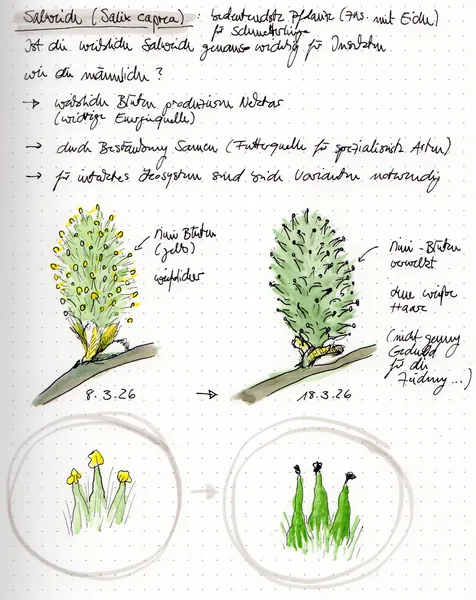
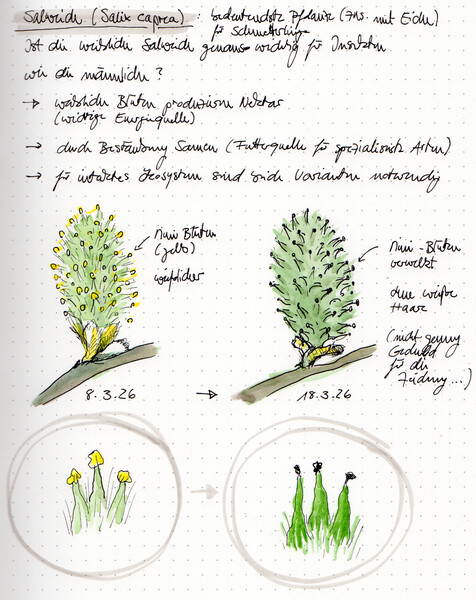
We have a white willow growing in our garden; it must have self-seeded at some point, and we’ve just let it grow. White willows are always either female or male, and I never knew which one we’d ended up with. The sketch below shows my first close-up observations of our tree:
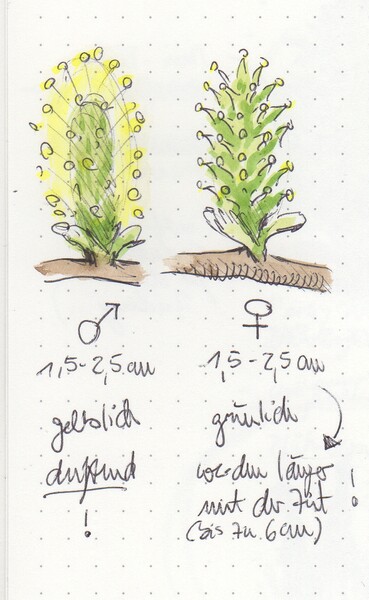
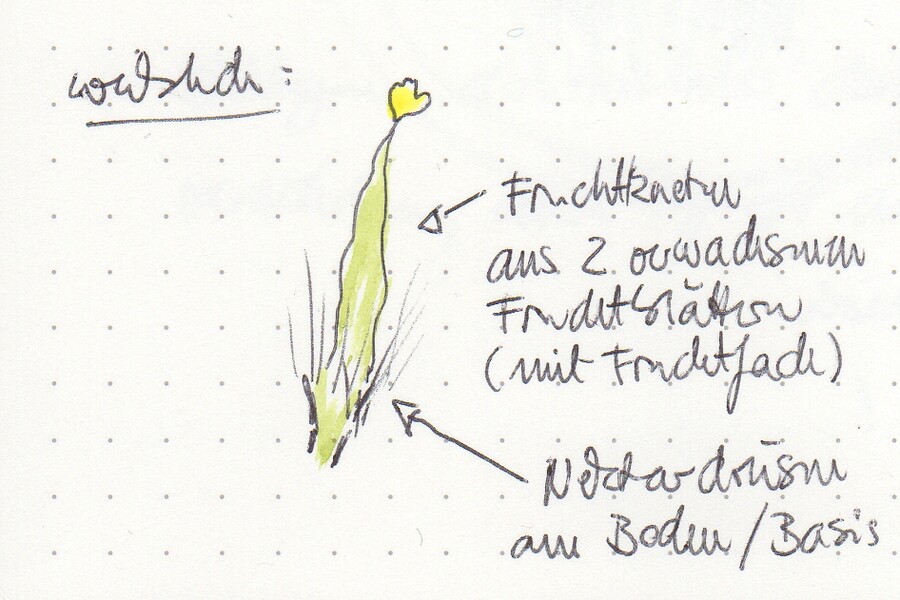
Since we only have one willow tree in our garden, I went online later and looked for pictures of white willow flowers so I could compare them. Pretty sure we have a female plant:
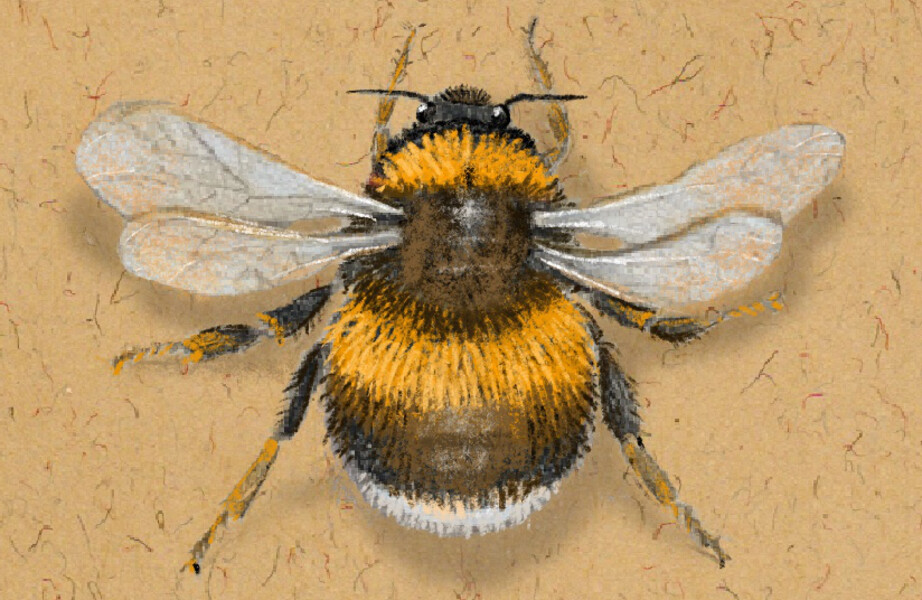
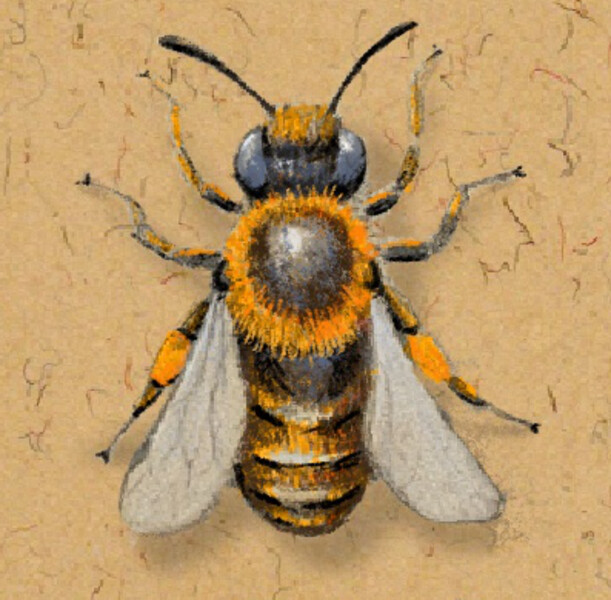
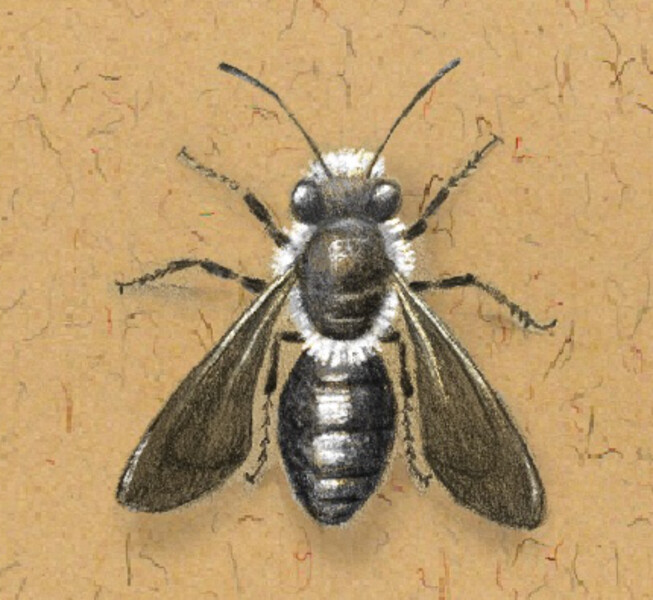
Male plants provide nectar and pollen, whilst female plants provide "only" nectar. Both types are important food sources for bees though. I found a long list of insects for which the tree is important: over 30 species of wild bees found in Germany, including bumblebees and several sand bees, narrow-bodied and furrowed bees, mason bees and spring silk bees. For certain species, such as the willow sand bee, the tree is the most important source of food. (Source: wildbiene.org) Below, from left to right: examples of a bumblebee, a mason bee and a sand bee, which I had previously illustrated:
The white willow is also important for butterflies. For many butterflies, such as the peacock butterfly and the small tortoiseshell, the white willow is a source of nectar and pollen. Later on, the leaves also serve as food for the caterpillars of many species. (source: NABU NRW)
The number of insects that are always buzzing around our (female) specimen is certainly striking:
Dead quiet around the forsythia
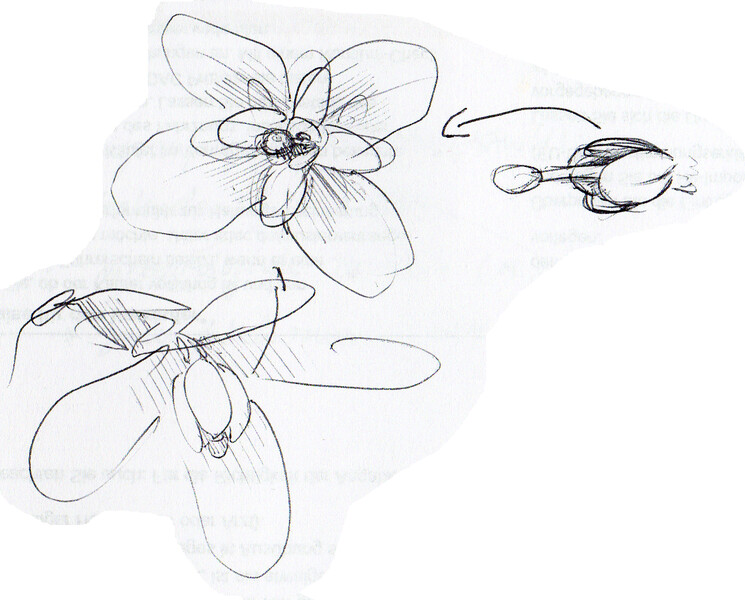
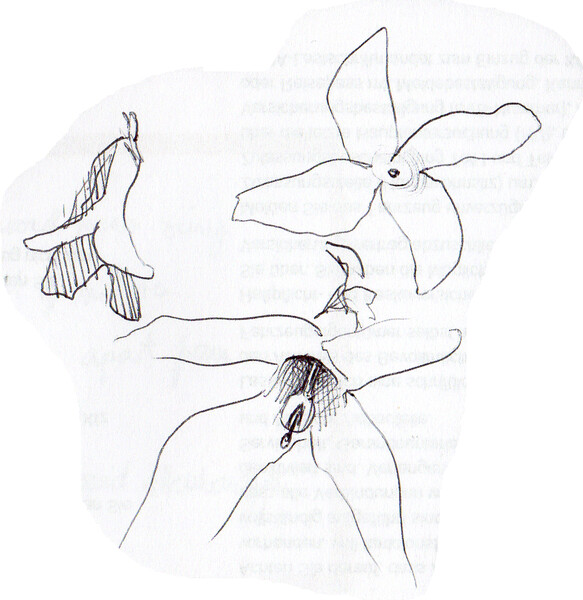
No insects, on the other hand, visit the forsythias next door. I knew that already, but it strikes me time and again when I compare them directly in the spring. They stand in the neighbouring gardens in all their glory and they do look great, but they’re just sterile. The ornamental forsythias sold in this country are usually hybrids; you can usually tell by the "X" in the Latin name. Most of these plants have "dry flowers" without nectar or pollen (exception see list below!).
Click to enlarge :)
I must admit, the standard forsythia looks stunning and seems to shout from afar that spring has arrived. But what good is such a call to the insects that fly over only to find no food whatsoever? And isn’t the bright colour, in this case, actually harmful to wildlife, because it gives the false impression of something that doesn’t exist? Researchers appear to be divided on whether insects learn after a few failed attempts that there is nothing to be gained from this plant - or whether it is, in fact, harmful when animals weakened by winter are misled in this way whilst searching for food.
Best Alternative to Standard Forsythia:
Forsythia "Beatrix Farrand" (the only bee-friendly hybrid!)
Forsythia Europaea (European Forsythia)
White Forsytha (Abeliophyllum distichum, white flowers)
Cornelian Cherry (Cornus mas)
That way, everyone would benefit - both people and the environment.
Or, as in our case, just let nature have its way.
Bye, Imme



Imke Sönnichsen © 2026 | Template © 2009-2026 by modified eCommerce Shopsoftware