
The Mossy Nib
Another Blog?
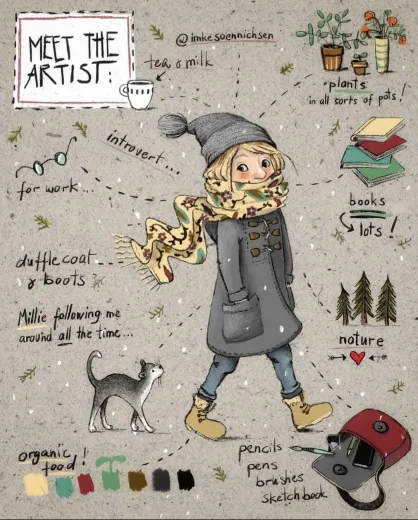
Why ‘The Mossy Nib’?
Yet another blog with pretty pictures of colourful flowers? More poetic texts written by an AI, an “intelligent tool” that doesn’t actually know what it’s saying, but merely calculates probabilities? Used to please an algorithm, even though the machine has never seen nature and isn’t part of it either?
Not quite. This is written (and drawn) by a human being. For human beings. I used to do it digitally (see picture), but now I prefer to use a pen on paper. And I just love moss, ferns and everything that grows in the shade. Hence the name.So, who's writing this?
Hi, I'm Imke, but you can just call me Imme. That was my nickname as a child, and my family still calls me that to this day. You may know me as a kidlit illustrator and you've probably seen my personal work on social media. I'd like to use this blog to show you another side of me, one that's been a reoccuring theme throughout my life: a strong sense of connection with nature. Imme was the little girl who read Konrad Lorenz (an austrian zoologist, ethologist and ornithologist) and then went off to study the creatures in our pond with a tictac box, who measured the wingspan of the pteranodon with long strides in our corridor, who had shelves in her children's room filled with bones and shells, who enthusiastically took apart and examined the pellets of an owl that lived in the garden (in the hope of being able to piece together the skeleton of a mouse), who found a strange wobbly thing on the beach that turned into a sea anemone and who was constantly "rescuing" animals by getting them home in pockets or the school bag...I'd like to take you on a journey into the wild. An adventure for which you don't have to book a flight, since it begins right at your doorstep.
What you can expect here:
• Portraits of plants and animals
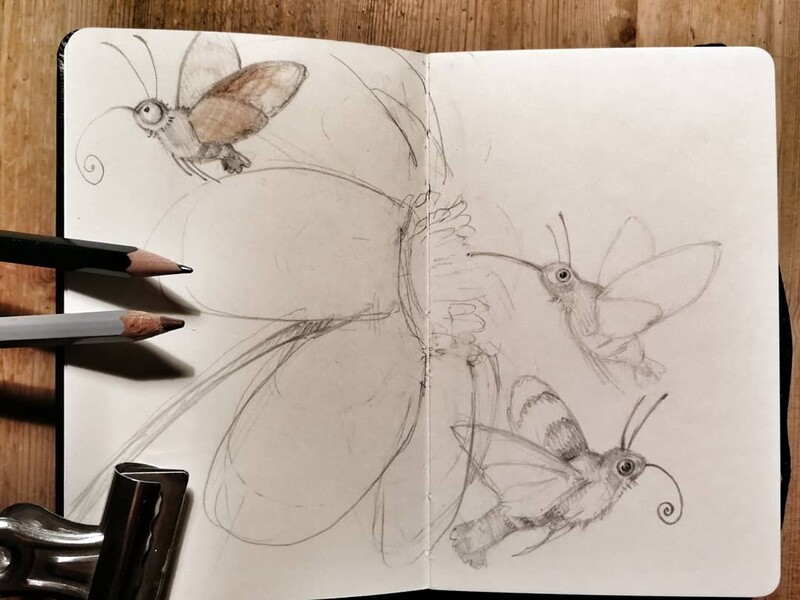
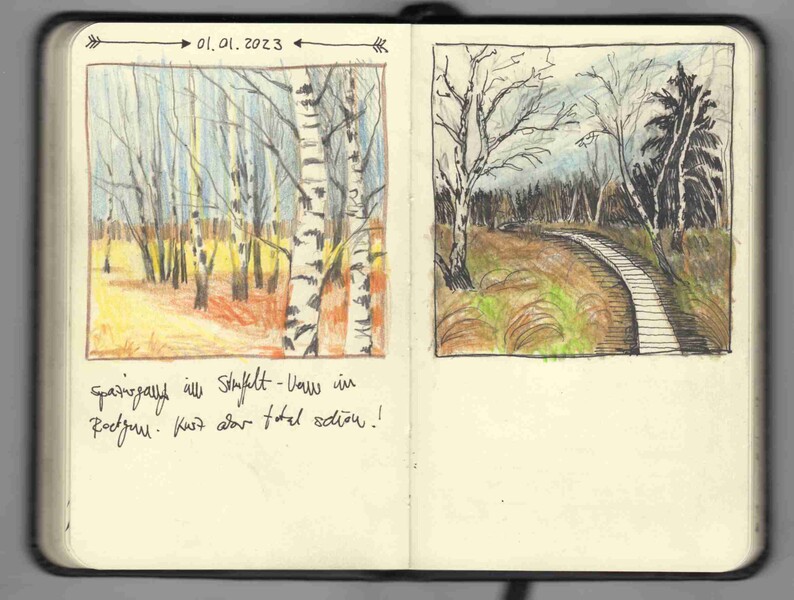
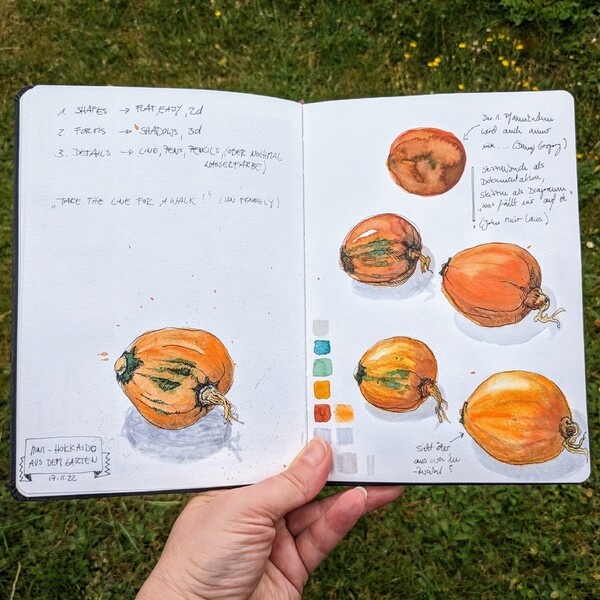
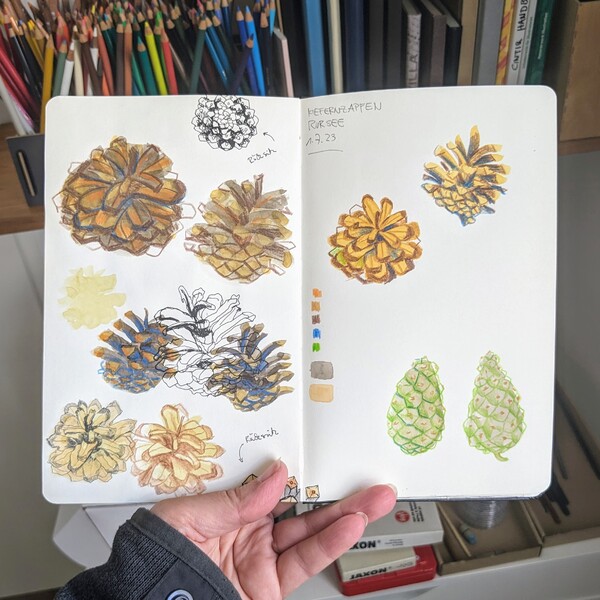
• A glimpse into my sketchbooks
• Nature studies from life as well as from foto reference
• Notes on things that catch my eye
• Infos that I've found oline
• Tipps regarding technique and materials
• Thoughts and Stories
What exactly is "Nature Journaling" ?
Ultimately, it involves the direct observation of nature through quick sketches, words and numbers. Scientists and artists have always produced studies of nature and used them as the basis for their further work. Well-known examples include Dürer, Da Vinci, Humboldt, Merian, Darwin and John Muir. 
John Muir, from his Alaska Notebooks, ca 1914, Public domain, via Wikimedia Commons
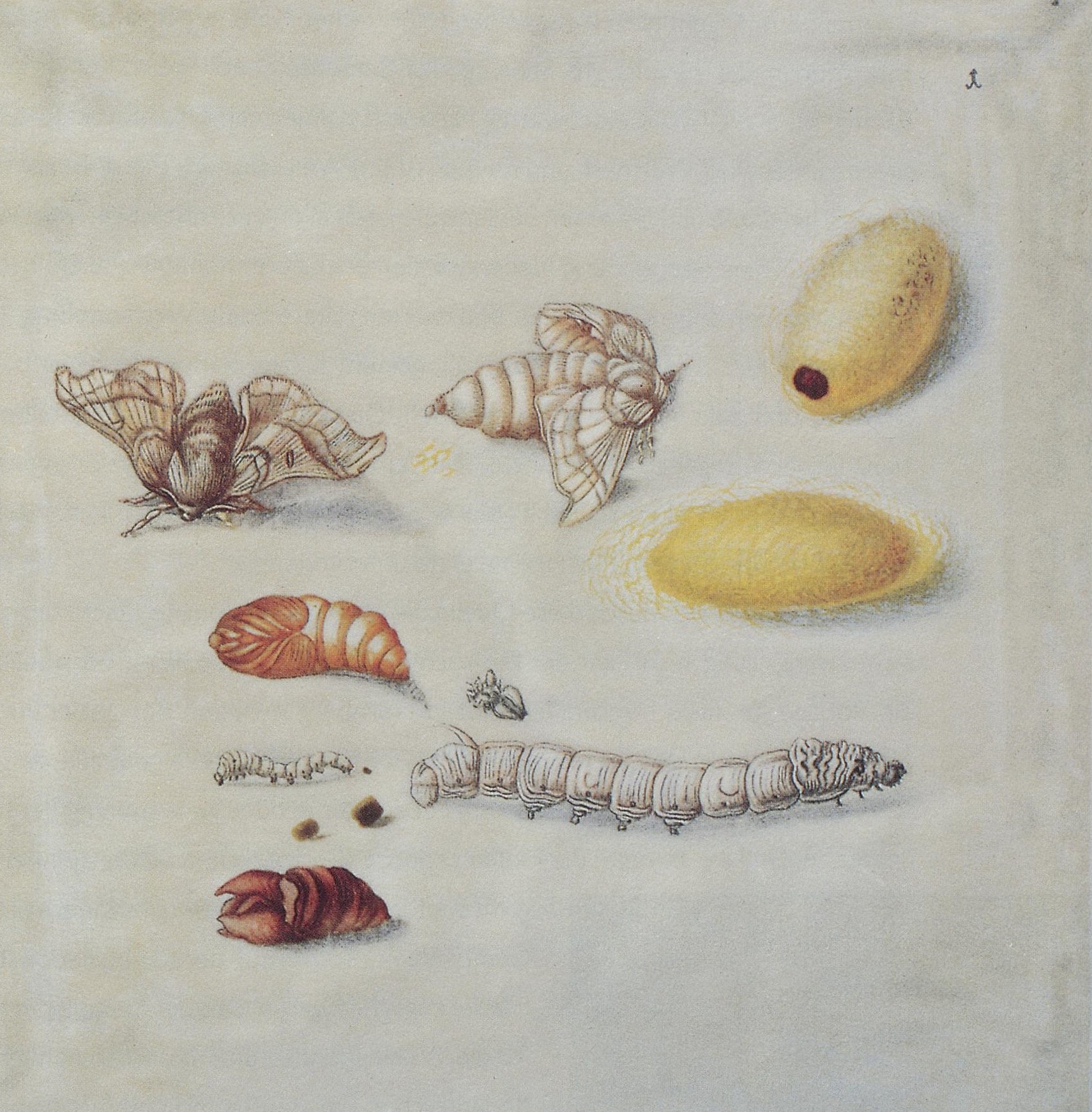
Maria Sibylla Merian, Aquarell aus Merians Studienbuch, ca 1686 - 1717,
Public domain, via Wikimedia Common

Leonardo da Vinci (1452 - 1519), Public domain, via Wikimedia Commons
I first came across diary-style nature studies in a book of drawings and watercolours by Edith Holden (1972–1920). Holden was an illustrator from England and is now better known for her nature diaries that were published after her death than for her actual works.

Edith Holden, from Edith Holden's Phenology of the English Midlands by Month, 1905-1906,
Public domain, via Wikimedia Commons
However, you don’t need to have studied science or art or illustration to engage with the natural world around you. You can learn to observe closely if you take the time to do so. This is not about achieving perfect results, it's more about looking, noticing and learning. Nowadays, many people use observing nature with pen and paper as a way to slow down, as a means of getting a deeper connection with nature, and to become (once again) one with it. For me, a key aspect of nature journaling is precisely this personal experience, combined with a respect for flora and fauna and a desire to preserve biodiversity.
Sir David Attenborough
Well-known figures in Nature Journaling today :
In the US: Clare Walker Leslie (https://www.clarewalkerleslie.com/) and John Muir Laws (https://johnmuirlaws.com/), Alex Boon in the UK (https://alexboonart.com/) and Verena Hillgärtner in Germany (https://wiederwilderwerden.de/) .
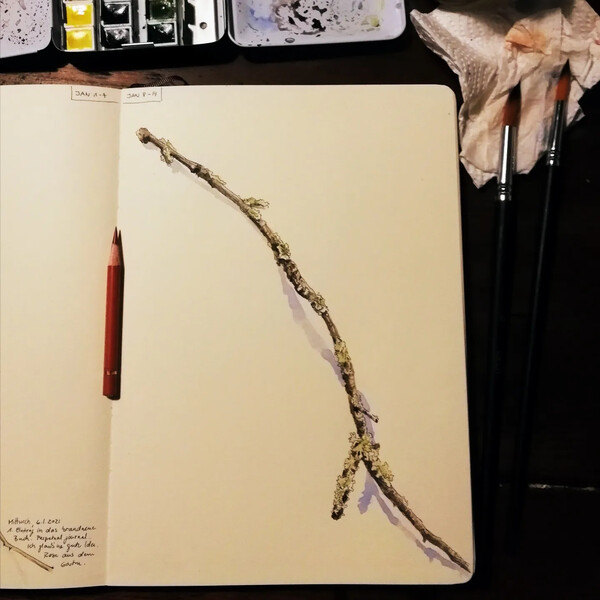
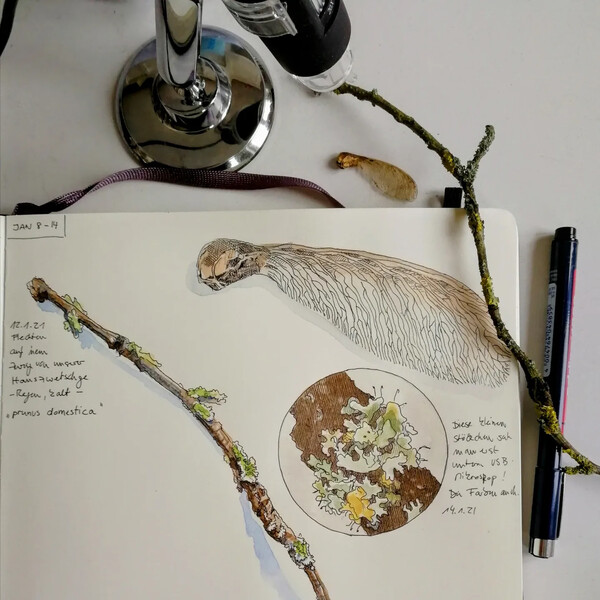
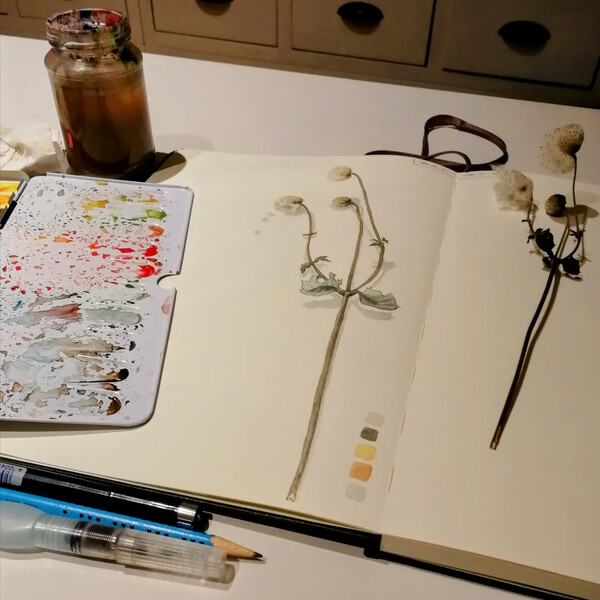
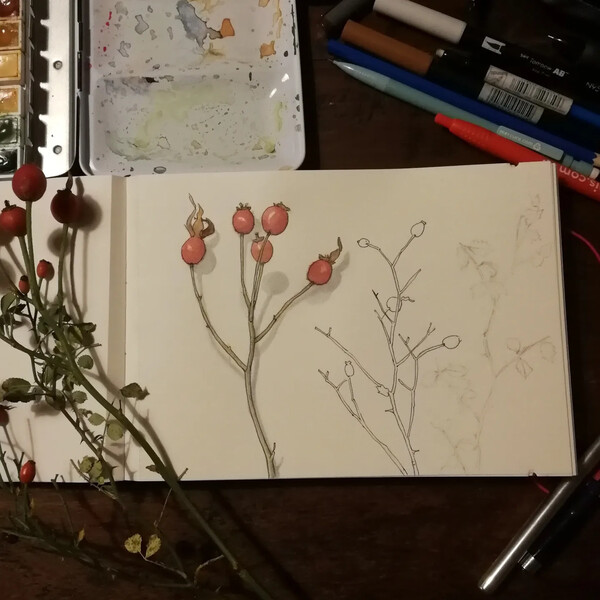
My nature studies are usually scattered across several sketchbooks. I often draw on location, and sometimes I take my treasures home with me. Special finds are always particularly precious to me, even if others might see them as nothing more than a normal twig, a stone or a shell.
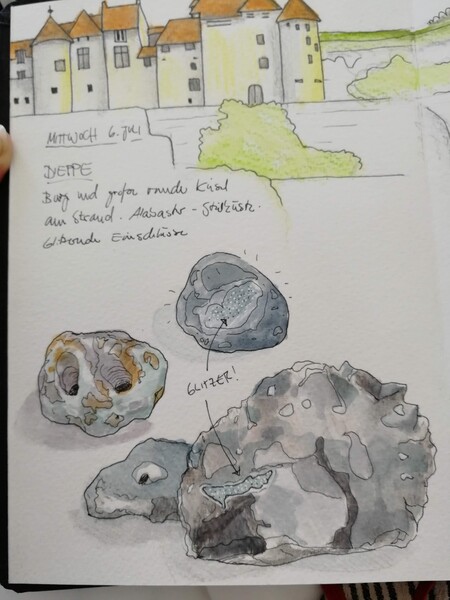
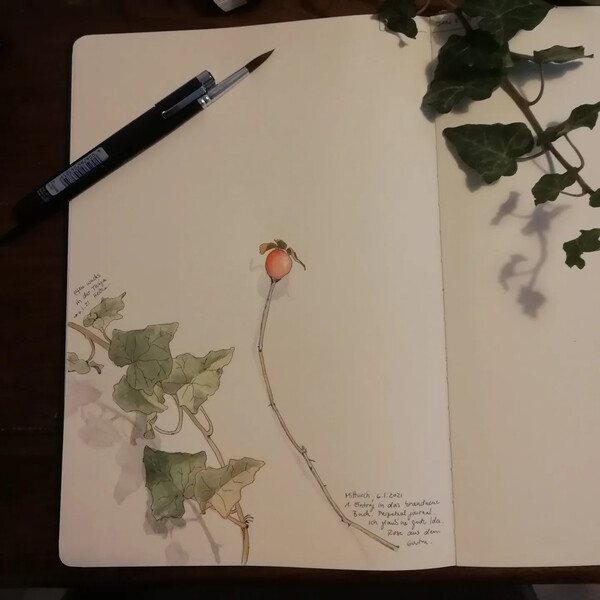
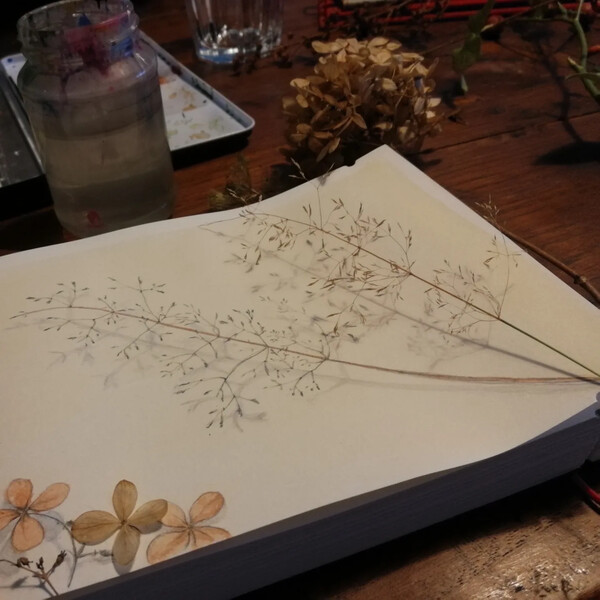
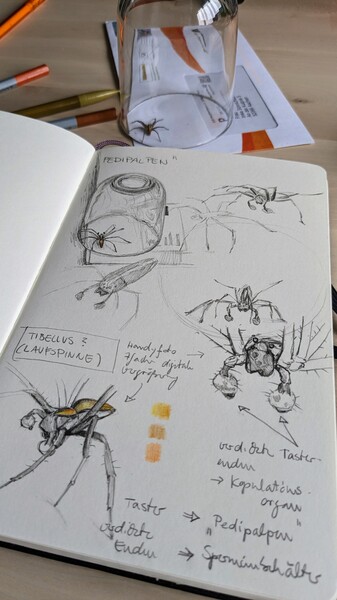
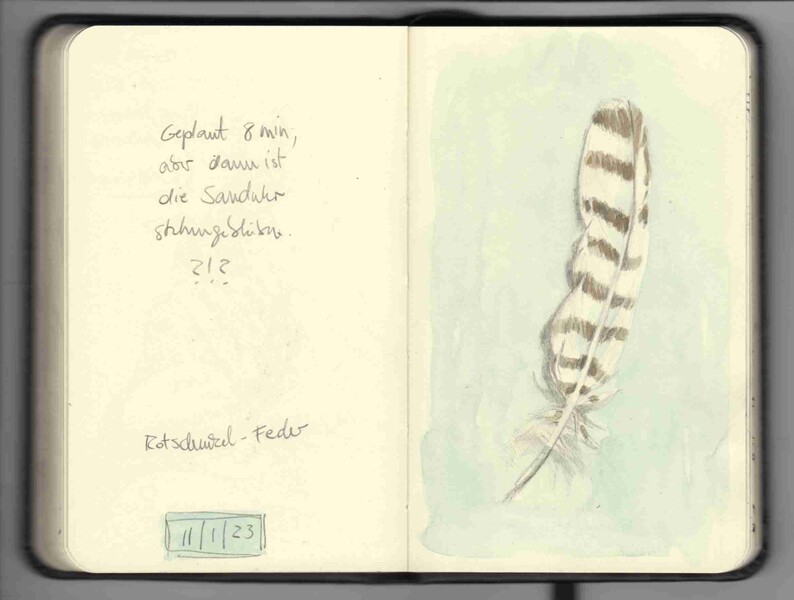
What’s the strangest thing you’ve ever found in nature?
Feel free to let me know in the comments :)
Bye, Imme



Imke Sönnichsen © 2026 | Template © 2009-2026 by modified eCommerce Shopsoftware